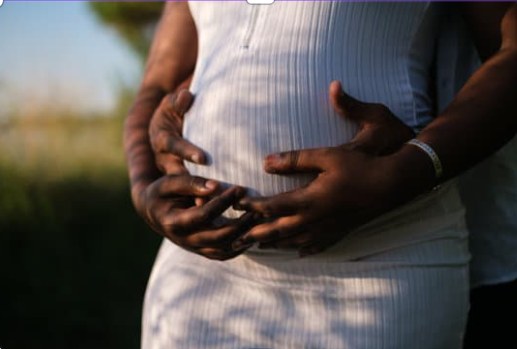
When I was growing up puberty and sex were taboo subjects in my house. For example if characters on TV started kissing a little too intensely the TV would suddenly be switched to another channel. Sexuality was linked to shame. But even as a child, I sensed that power was linked to sexuality. Why else would it make adults so nervous and make my siblings and I so curious?
When we skip conversations about sexuality we can also miss opportunities to identify fertility issues. My period started a day before my 16th birthday and I thought nothing of it until years later when I got married and we were thinking about children. It was then, in my mid-20s, that I started looking into why my cycle was so irregular. A scan confirmed I had PCOS and I was also told that I would struggle to conceive.
Although I was trying to stay positive and hopeful, fear about never having children starting to creep in when we'd been trying for 12 months and did not conceive. I went to the doctor again. Eventually we were referred for tests and I was asked to take a drug before one appointment, to help the doctor or nurse assess something I cannot quite remember. The results were fine and another appointment was scheduled.
Days before that second appointment I felt odd. I was in the office on a Saturday for the first time because I was managing the office renovation. As the decorators worked around me I sat at my desk knowing that something wasn't normal. I had been feeling bloated for days. I popped out to buy a pregnancy test and took it in one of the office cubicles. I will never forget the feeling of shock and excitement when I saw the two blue lines, which indicated a positive pregnancy. Days later we found out I was between 12 to 14 weeks pregnant. It was impossible to know partly because of my PCOS. In addition to the shock and excitement, I had my first feeling of "mum guilt." What if the drug I had taken before the fertility test caused harm to my baby? Why had I not taken the pregnancy tests more regularly? It took me a while to consider that the hospital could have asked me to take a pregnancy test just before they told me to take the drug, especially because they knew we were actively trying to conceive. It occurred to me it was the hospital's job to focus on sickness not wellness. And, ultimately, I needed to take radical responsibility of my body, my fertility and pregnancy journey.
Yet I had been taught to trust the medical system, even more than my own instincts about my body. So rather than look inwards I decided to blame the hospital trust that I was with at the time. I registered with a different hospital that had a better overall reputation. However, it was further from my house and that would present a problem when I went into labour. When my labour started I was concerned that I might be too far from the hospital when the baby came. So I insisted on going to the hospital early. Twice. And twice we were asked to go home. Looking back now, they were actually sending me to the best place to progress my labour but nobody used those simple words: "you are more likely to speed up your labour if you stay home, which is a more familiar and oxytocin-inducing environment." I thought the hospital was not offering me the care I was entitled to. Hindsight has also shown me that the car journey itself, would have been the main reason why my contractions slowed down whenever I arrived at the hospital. That environment heightened my alertness and my adrenaline levels spiked. The third time we went to the hospital they did not send us back. Instead I had a cascade of interventions that eventually led to a caesarean section. I will never forget that deep feeling of failure that came from having a birth that was the exact opposite of what I wanted. Having "failure to progress" written on my notes was, at the time, a confirmation that I was a failure.
When I fell pregnant with my second son I knew that if I wanted a vaginal birth my hospital choice was not the most important factor. Despite my hopes of a VBAC my attention was divided between my one year old and managing the renovation of our house. When I finally went into labour I was exhausted from all the juggling. Rather than listening to my body and noticing that my contractions in the moment were completely manageable, I was thinking ahead to how bad I expected the pain to get and placing too much value on the pain relief I could receive at the hospital. I had not been taught about natural pain relief. My fears about uterine rupture also crept to the surface. So again, I went into hospital too early. I was nearly turned away, but one of the midwives took a liking to my skirt (believe it or not!) Then offered to take us to a private room she knew was available! My husband, myself and the doula we had contacted just a few hours before, were left to get on with things by ourselves in a room. At the time I noticed that this privacy was a blessing. However my waters leaked and the green tint made us all nervous so we called the doctors. As I lay on the bed a doctor came in and said I "needed" to have a caesarean because I had already had one and my baby would be in danger. I was too tired to argue and I just kept thinking that I could finally rest after the baby arrived. So in that moment I gave up on wanting a vaginal birth. I was tired.
This time, when I held my new baby the sense of failure was much less. Especially because I had laboured in private for much of the time with people who I had chosen. Yet I knew I could have done more to get the birth I had truly wanted. One memory that still stings when I think back to this second postpartum period was how my older son reacted to me when I got home. While I was at the hospital I missed and worried about him but I felt too drained to put on a happy face and be chatty with him. Especially because the doctors were investigating a hole in my new baby's lungs (which, in the end, required no intervention). So when I got home 3 days later my son refused to greet me. I tried to hide my feelings of guilt and heart break, but I learnt many lessons in that one moment, looking at my son as he avoided my eye contact. I realised he felt hurt, abandoned and possibly even emotionally unsafe. I had not prepared him for my absence, nor had I reached out when I was away. The unnaturalness of what had just happened hit me in a different way. He had no idea that mummy had been in extreme pain from a major operation. He had no idea that mummy had been kept awake for days by bright lights, nurse check-ins, beeping and other babies and mothers crying in beds next to her. All he knew was that mummy was not there for him. Having a homebirth would not have been the only solution to me avoiding that reaction. I could simply have pushed myself to call him. However, that interaction did force me to think more clearly. During the first two weeks of being back home I realised that if I ever got pregnant again I would do three things differently:
1. Research how other women had had successful vaginal births, so that I would feel strong enough for all my children, not just the newest one.
2. Address all the fears that I had about birth. I had been particularly fearful about uterine rupture and I only admitted that to myself after my second birth.
3. Invest in a course and/or get high quality professional support to help me achieve the birth that I wanted. No expense would be spared.
When my youngest son was 2 years old I started a psychology Master's degree. My dissertation on pregnancy during the Covid-19 pandemic was the beginning of research that would help me personally. It was also part of my journey to healing the brokenness and disconnect I felt from having two emergency caesareans. The dissertation helped me investigate whether and how the UK maternity system worked for or against pregnant black women. I received praise from my university for tackling this subject, as well as a distinction for my dissertation. But the biggest thing I took away from it was the revelation that free birth was the solution for so many women, particularly middle class white women, who had experienced traumatic hospital births. Around Covid time it was widely reported that black women were 5 times more likely than white women to die during pregnancy. When I combined this reality, with my knowledge that home birth was just as safe as hospital birth for many women, my perspective on home birth changed. As the years went by I continued to educate myself about birth, knowing that even if I did not have another baby I wanted to somehow help other women avoid making the mistakes I did.
When my second son was 5 years old I became pregnant again. By that point I had listened to, read or watched over a 100 women's stories about VBAC; and I saw the value in investing in birth preparation. My preparation included learning about and applying sexuality in a way that nobody had taught me before. Embracing and using my sexuality contributed to a more comfortable and pleasurable labour period. I also prioritised rest during my last pregnancy in a way that would seem radical to the old me. Because I knew that I was responsible for my own physical and mental wellness, I did things like confidently reject appointments that had been automatically generated for me, as a result of policies that were not designed for me as an individual. I also moved some appointments to when it suited me. And during my labour, when I was tired, I… rested. That was just one of many luxuries of choosing to birth at home. As my doulas had said when I doubted whether I should rest at one point, resting gave me the energy I needed when labour ramped up. My baby was born with me feeling strong and supported, surrounded by only the people who I felt safe enough to expose my sexual parts to.
Having a wonderful birth means different things to different people. It doesn't have to mean having a water birth, or trying to look serene when you are experiencing discomfort. I describe my birth as wonderful because I conquered my most haunting fears; felt in control of my body and my environment; and I included pleasure and rest whenever I needed to.
My unique approach to birth preparation is influenced by my research, the education I have invested in, and my personal experience. Yet my approach is also shaped by the needs and circumstances of the individuals I support. I feel so privileged and fulfilled to be helping other women and their families during what is such a special and potentially sensual time. Regardless of what labels have been placed on you, you deserve to be informed, empowered and excited about your birth. I am not ashamed to let couples know that including rest and sexual pleasure on their journey to birth could enhance their experience in ways they did not expect.